
What Every Filipino Buying Property in New Zealand Needs to Know in 2026
New Zealand and the Philippines share one of the most active migration corridors in the Pacific. There are over 70,000 Filipinos living in New Zealand, with strong ongoing migration through skilled worker, essential skills, and family reunification pathways. Filipinos are consistently among New Zealand’s fastest-growing migrant communities, drawn by employment opportunities, quality of life, and a country that is geographically close to home and culturally welcoming.
That migration pipeline creates a specific property market dynamic: a large and growing population of Filipinos who are already in New Zealand and building toward home ownership, alongside a smaller but significant group of Filipinos based in the Philippines who are looking to invest in New Zealand property ahead of or alongside a relocation plan.
But a Filipino buying property in New Zealand in 2026 faces a legal and financial landscape that most people enter underprepared. The mistakes made at the eligibility and structuring stage are the most expensive ones, because they are typically discovered after an offer is already on the table.
This guide covers exactly what every Filipino buying property in New Zealand needs to know in 2026, from OIA eligibility and residency pathways through to Foreign Buyer Eligible new builds, financing, tax, and how to find the right agent for your situation.

Mistake 1: Not Knowing Which OIA Category Applies to a Filipino Buying Property in New Zealand
The starting point for every Filipino buying property in New Zealand is the Overseas Investment Act 2005 (OIA). The OIA determines what you can buy, whether you need Overseas Investment Office (OIO) consent, and what conditions apply to your purchase.
Unlike Singaporean buyers, who hold a specific treaty-based exemption allowing them to purchase most existing residential property freely, a Filipino buying property in New Zealand is treated as a general overseas person unless they hold a qualifying New Zealand visa. There is no Philippines–New Zealand trade treaty that replicates the Singapore exemption.
What this means in practice is that your legal position as a Filipino buying property in New Zealand is determined entirely by your visa status. Here are the four categories that matter:
Category 1: NZ Citizen or Australian Citizen/Permanent Resident
If you hold a New Zealand or Australian citizenship or permanent residency, you can buy residential property freely. No OIO consent required. This applies to many Filipinos who have naturalised or obtained permanent residency through long-term NZ employment.
Category 2: NZ Residence Class Visa + Ordinarily Resident
If you hold a New Zealand residence class visa and have been physically present in New Zealand for more than 183 days in the 12 months before your purchase, you can buy residential property freely, on the same terms as a NZ citizen. This is the most common position for Filipinos who have been living and working in New Zealand on a residence visa for one or more years.
Category 3: NZ Residence Class Visa But Not Yet Ordinarily Resident
If you hold a NZ residence visa but haven’t yet met the 183-day threshold, you can still purchase residential property to live in, but OIO consent is required first. Under the March 2026 OIA reforms, confirmed by LINZ, straightforward applications are now expected to be processed within five working days. The property must be intended as your primary residence, and conditions attach to the consent.
Category 4: No NZ Visa, Philippines-Based Buyer
A Filipino buying property in New Zealand without any NZ visa cannot purchase existing residential property. The cleanest and most legally straightforward entry point is a Foreign Buyer Eligible new build, which is exempt from the standard overseas buyer restrictions under the OIA and available to any overseas person regardless of visa status.
Mistake 2: Overlooking How Quickly the Ordinarily Resident Threshold Is Reached
Many Filipinos who are already living and working in New Zealand on a residence visa assume they cannot buy property because they’re not citizens. This is one of the most common misconceptions among Filipinos buying property in New Zealand, and it’s costing people time in the market.
If you hold a New Zealand residence class visa and have spent more than 183 days physically in New Zealand in the 12 months before your purchase, you are ordinarily resident and can buy any residential property freely, on identical terms to a New Zealand citizen. No OIO consent. No conditions. No additional cost.
For a Filipino who arrived in New Zealand on a residence visa, through the Skilled Migrant Category, the Essential Skills Visa pathway to residency, or family reunification, the 183-day threshold is typically reached within the first six to seven months of living in New Zealand. Many Filipinos buying property in New Zealand are already past this threshold and don’t know it.
The LINZ eligibility tool takes approximately five minutes to work through and will confirm your position definitively. Check it before assuming you face restrictions, the answer may be simpler than you think. If you’ve been in New Zealand on a residence visa for more than six months and have been living here continuously, there is a strong chance that a Filipino buying property in New Zealand in your position can proceed without any OIO consent process at all.
Mistake 3: Missing the New Build Pathway for a Philippines-Based Filipino Buying Property in New Zealand
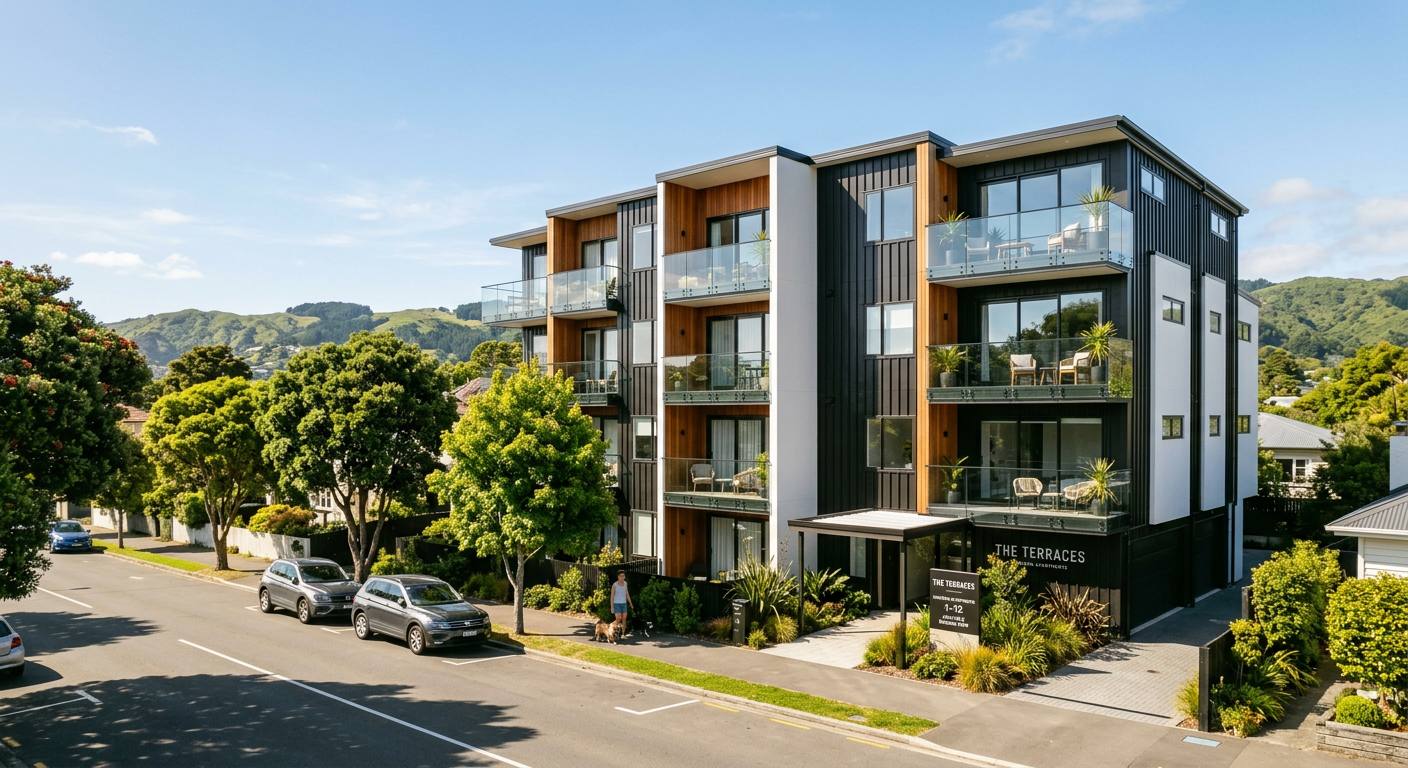
For a Filipino buying property in New Zealand from the Philippines, without a NZ residency visa and without going through the OIO consent process, Foreign Buyer Eligible new builds are the definitive entry point.
The OIA exemption for new builds is broad and applies regardless of visa status. A Filipino buying property in New Zealand that qualifies as a Foreign Buyer Eligible new build can purchase without OIO consent, without the delays of a consent application, and without the conditions that attach to consent-based purchases. The property must meet the new build definition, generally a property with a code compliance certificate issued within a set period, or purchased off-plan from a developer.
For a Philippines-based Filipino buying property in New Zealand as a yield investment, the new build pathway delivers several practical advantages beyond legal access:
- Healthy Homes compliance from settlement, no remediation cost risk for a landlord managing a property from overseas
- Modern finishes and lower maintenance, critical when you’re managing from a different time zone
- Developer warranties covering workmanship defects in the early ownership period
- Off-plan purchase options that allow you to lock in pricing before completion
- Higher tenant demand from professional tenants who prefer newer stock
Browse Foreign Buyer Eligible listings on AsetraX, every listing clearly marks its Foreign Buyer Eligible status, so you can immediately filter to what’s accessible without needing to cross-reference individual LIM reports.
Mistake 4: Getting the Financing Wrong as a Filipino Buying Property in New Zealand
Financing is where many Filipinos buying property in New Zealand hit their first serious obstacle, not because NZ lenders won’t work with them, but because they approach financing before confirming legal eligibility, or because they underestimate the documentation burden for overseas-income buyers.
The correct sequence for any Filipino buying property in New Zealand is: confirm OIA eligibility first, then pursue financing. Applying to a bank before you know your legal position can result in a rejection that damages your credit profile and complicates subsequent applications.
Once eligibility is confirmed, here is what a Filipino buying property in New Zealand should expect from NZ lenders:
If you’re ordinarily resident in NZ on a residence visa:
You’re treated comparably to a NZ citizen for lending purposes. Standard income documentation applies, payslips, IRD number, bank statements. LVR (loan-to-value ratio, the proportion of the property funded by a mortgage) requirements are the same as for domestic buyers. This is the most straightforward financing position for a Filipino buying property in New Zealand.
If you hold a NZ residence visa but are not yet ordinarily resident:
Some NZ lenders will advance lending, but criteria are stricter and LVR caps are typically lower, often 60–70% maximum. The lender will want to see OIO consent before proceeding to unconditional approval.
If you’re Philippines-based without a NZ visa:
NZ bank lending to non-resident overseas persons is available but genuinely restricted. Most major NZ banks will not lend to non-residents purchasing Foreign Buyer Eligible new builds without some form of NZ income or existing NZ banking relationship. Non-resident specialist lenders and mortgage brokers exist for this scenario, but rates and terms are less favourable than for resident buyers. Factor this into your yield calculations before committing.
Remittance documentation matters: A Filipino buying property in New Zealand who is funding their deposit from Philippine earnings or savings will be required to provide clear source-of-funds documentation to satisfy NZ anti-money laundering (AML) requirements. This includes Philippine bank statements, tax returns (BIR), payslips or proof of business income, and a clear paper trail for the remittance of funds to New Zealand. Prepare this documentation early, it is required by both the bank and the NZ lawyer handling settlement.
An independent NZ real estate agent on AsetraX who regularly works with APAC buyers can refer you to brokers and lawyers experienced with Filipino buyer circumstances, removing the guesswork from building your professional team.
Mistake 5: Underestimating the Tax Position for a Filipino Buying Property in New Zealand
New Zealand’s tax position for property investors is often misunderstood by Filipinos buying property in New Zealand, particularly by buyers who are more familiar with Philippine tax rules, which operate very differently.
The bright-line test: New Zealand currently applies a two-year bright-line test to residential property. If you sell within two years of purchase, any capital gain is taxable as income at your marginal rate. If you hold beyond two years, the gain is generally not taxable, subject to the intent test (see below). For a Filipino buying property in New Zealand as a medium-to-long-term investment, this is a favourable tax position compared to many APAC markets.
The intent test: Even outside the bright-line window, if you purchase property with the intent to resell at a profit, any gain is taxable. This applies regardless of hold period. The key is genuine long-term investment intent, evidenced by your purchase rationale, financing structure, and behaviour as a landlord.
Rental income is taxable: Rental income earned from a New Zealand property is taxable in New Zealand. If you are a New Zealand tax resident, either because you hold a residence visa and meet the 183-day test, or because you own a property that constitutes your permanent place of abode, your worldwide income is also taxable in NZ. For a Philippines-based Filipino buying property in New Zealand who is not yet a NZ tax resident, rental income from a NZ property is taxable in NZ regardless, but your Philippine income is not. Understand which category applies to you before settlement.
No general capital gains tax: New Zealand currently has no broad capital gains tax, gains on property held beyond the bright-line period are not ordinarily taxable. This is a meaningful advantage over Australia and many APAC markets, and one of the structural attractions of NZ property investment for Filipinos buying property in New Zealand as a long-term strategy.
Always seek specific advice from the IRD or a qualified NZ tax adviser before proceeding, individual circumstances vary.

Mistake 6: Choosing the Wrong City Without Understanding the Market
A Filipino buying property in New Zealand for the first time often defaults to Auckland, because it’s the largest city, the most internationally recognised, and the city many Filipinos in New Zealand are already living in. But Auckland is not automatically the right choice for every Filipino buying property in New Zealand, particularly in 2026.
As covered in depth in the Auckland vs Wellington property guide, the two markets offer very different risk/return profiles right now. Wellington has corrected approximately 24% from its 2021 peak, offers gross yields of 5–6%+ on well-located stock, and has record-low rental vacancy driven by its government-anchored employment base. Auckland has corrected only around 2%, yields run at 3–4%, and entry prices are meaningfully higher.
For a Filipino buying property in New Zealand as a yield-first investment, particularly from the Philippines where the NZD return needs to justify the capital deployment and currency risk, Wellington’s current market fundamentals make a stronger case than Auckland’s at the same capital outlay. For a Filipino buying property in New Zealand to live in, the right city is wherever your employment is, but the investment case in Wellington is one worth understanding before assuming Auckland is the default.
Browse current ANZ listings on AsetraX across both cities, or read the Wellington property investment guide and the Auckland vs Wellington comparison before deciding on a market.
Mistake 7: Trying to Buy Without the Right Agent
The final, and most avoidable, mistake a Filipino buying property in New Zealand makes is navigating the market without an agent who understands cross-border purchases and the specific context of APAC buyers.
New Zealand’s property market is relationship-driven and moves fast. Listings at the right price in the right suburb don’t sit around. Due diligence windows are short. And agents who understand what APAC buyers need, yield data, Foreign Buyer Eligible confirmation, clear documentation, time-zone-aware communication, and a familiarity with the remittance and sourcing documentation that NZ lawyers require, are a specific and valuable subset of the agent population.
For a Filipino buying property in New Zealand who is coordinating a purchase from Manila or Cebu, the practical requirements are even more specific: an agent who responds promptly across Philippine time zones, who can manage the inspection and due diligence process on your behalf, and who understands the additional documentation that overseas-funded purchases require.
Every agent on the AsetraX ANZ property marketplace has built their profile specifically for cross-border buyers. The AsetraX marketplace is structured for international investors, Foreign Buyer Eligible status is clearly marked on every listing, and agents are set up to work with buyers across APAC time zones, including the Philippines.
What to Do Next as a Filipino Buying Property in New Zealand
Your next steps depend on which category applies to your situation:
If you hold a NZ residence visa and have been in NZ for 6+ months:
Check the LINZ eligibility tool to confirm your ordinarily resident status. If you qualify, you can browse all ANZ listings on AsetraX and proceed on the same terms as a NZ citizen.
If you hold a NZ residence visa but are not yet ordinarily resident:
Get OIO consent pre-approval before making any offer. Brief a NZ property lawyer on your situation before signing anything.
If you’re Philippines-based without a NZ visa:
Your entry point is a Foreign Buyer Eligible new build. Read the Wellington property investment guide to understand which market suits a yield-first overseas investor, and connect with an agent on AsetraX who works with non-resident APAC buyers.
Regardless of your category:
Get your source-of-funds documentation in order early. Brief a NZ property lawyer before making an offer. And read the AsetraX blog for up-to-date guides on the NZ investment market written specifically for APAC buyers.
The information in this article is for general guidance only and does not constitute legal, financial, or tax advice. New Zealand’s overseas investment rules change regularly, always verify current requirements with a qualified New Zealand lawyer and tax adviser before proceeding with any purchase.
Browse ANZ investment properties on AsetraX, Foreign Buyer Eligible status clearly marked on every listing, built for APAC buyers.




The OFW investment angle is one I hadn’t considered, I have Filipino colleagues in Singapore who are very active property investors. This article would be directly relevant to them. Is there a way to share AsetraX content easily?
Hi Wei Ling, absolutely, please do share. Every article has social sharing buttons at the top and bottom, Facebook, X, WhatsApp, Line, and LinkedIn. The Line share button is particularly useful for APAC audiences. We’d love for the content to reach the right readers.