
What Every Vietnamese Buying Property in New Zealand Needs to Know in 2026
Vietnamese buying property in New Zealand is a growing trend, and a well-founded one. Vietnam’s urban professional class, centred in Ho Chi Minh City and Hanoi, is increasingly sophisticated about offshore capital diversification. New Zealand’s stable English-speaking legal system, clean freehold title, zero stamp duty, and materially corrected 2026 market pricing present a compelling proposition for Vietnamese buying property in New Zealand as a yield investment, a future relocation anchor, or a portfolio hedge outside Southeast Asia.
New Zealand is also home to approximately 15,000 Vietnamese-born residents, creating a split audience of Vietnam-based investors coming through the Foreign Buyer Eligible pathway, and NZ-resident Vietnamese who may already qualify as ordinarily resident and buy without restriction. Each group faces a different set of access points, financing structures, and tax obligations.
But every Vietnamese buying property in New Zealand without understanding the OIA framework, the State Bank of Vietnam’s foreign exchange rules, Vietnam’s outward investment regime, and the cross-border tax position will make mistakes that are avoidable and expensive. This guide gives every Vietnamese buying property in New Zealand the complete picture before they commit.

Mistake 1: Every Vietnamese Buying Property in New Zealand Misreads Their Legal Access Under the OIA
The starting point for every Vietnamese buying property in New Zealand is their eligibility category under the Overseas Investment Act 2005 (OIA). Vietnam has no bilateral trade treaty with New Zealand that creates an exemption, which means every Vietnamese buying property in New Zealand is treated as a general overseas person unless they hold a qualifying NZ visa.
Your legal position as a Vietnamese buying property in New Zealand depends entirely on your visa status:
NZ or Australian citizen / permanent resident: Buy freely, no OIA restrictions. Vietnamese nationals who have naturalised or obtained NZ permanent residency through employment, study-to-work, or family pathways purchase on identical terms to a NZ citizen.
NZ residence class visa + ordinarily resident (183+ days in the prior 12 months): A Vietnamese buying property in New Zealand who holds a NZ residence class visa and has spent more than 183 days in New Zealand in the prior 12 months is ordinarily resident and can buy any property freely, same as a NZ citizen. Check the LINZ eligibility tool before assuming restrictions apply. Many Vietnamese buying property in New Zealand who have been living and working here for six months or more qualify and don’t realise it.
NZ residence class visa, not yet ordinarily resident: A Vietnamese buying property in New Zealand on a residence visa who has not yet met the 183-day threshold can purchase a property to live in with OIO consent, now processed within five working days under the March 2026 reforms confirmed by LINZ.
Vietnam-based, no NZ visa: A Vietnamese buying property in New Zealand without a NZ visa cannot purchase existing residential property. The clean legal entry point is a Foreign Buyer Eligible new build, exempt from standard OIA restrictions and available to every Vietnamese buying property in New Zealand regardless of visa status.
Establishing which category applies is the non-negotiable first step for any Vietnamese buying property in New Zealand. Getting this wrong means either missing access you already have, or making an offer on a property you cannot legally complete.
Mistake 2: Vietnamese Buying Property in New Zealand Misses Why NZ Property Beats Vietnam for Offshore Investment
Before the mechanics of access and financing, every Vietnamese buying property in New Zealand should understand the structural comparison between NZ property and Vietnam’s domestic and offshore property market, because the case for New Zealand is stronger than most Vietnamese buyers initially assume.
In Vietnam, foreign buyers, including overseas Vietnamese (Việt Kiều), face meaningful ownership restrictions. Under Vietnam’s 2023 Housing Law and the 2024 Land Law reforms (effective January 2025), foreign ownership of Vietnamese condominiums is capped at 30% of units in any given project, and foreign-owned properties carry a 50-year lease term rather than freehold title. Even Việt Kiều who hold a valid Vietnamese passport and now have expanded land use rights under the 2025 reforms still navigate a more complex ownership framework than the clean freehold title available to every Vietnamese buying property in New Zealand.
For a Vietnamese buying property in New Zealand, the contrast is direct: NZ freehold title is state-guaranteed under the Torrens system, with no ownership quotas, no lease term expiry, and no distinction between resident and non-resident buyers for Foreign Buyer Eligible new builds. There is no stamp duty, a saving of 1–3% compared to Vietnamese property transaction costs. There is no annual land tax. There is no broad capital gains tax beyond the two-year bright-line test.
The cyclical case for Vietnamese buying property in New Zealand in 2026 is equally compelling. Wellington sits approximately 24% below its 2021 peak, while the RBNZ has cut the Official Cash Rate from 5.5% to 2.25% since August 2024, driving early-stage price recovery already visible in February 2026 REINZ data. For a Vietnamese buying property in New Zealand at the yield-first level, Wellington’s Foreign Buyer Eligible apartments from NZ$325,000 delivering 5–6% gross yield represent a risk-adjusted return that Ho Chi Minh City’s mid-tier condo market, with its supply overhang and currency risk, does not currently match. Browse current ANZ listings on AsetraX to compare real stock.
Mistake 3: Vietnamese Buying Property in New Zealand Underestimates the Foreign Buyer Eligible New Build Pathway
For a Vietnam-based Vietnamese buying property in New Zealand without a NZ visa, the Foreign Buyer Eligible new build is the primary legal access point, and in the current market, it is also the most commercially attractive entry point available.
The OIA exemption for new builds is unconditional. A Vietnamese buying property in New Zealand through the Foreign Buyer Eligible pathway proceeds without OIO consent, without conditions, and on the same legal timeline as any domestic buyer. For a Vietnamese buying property in New Zealand who is managing the purchase remotely from Ho Chi Minh City, Hanoi, or Da Nang, the practical advantages of the new build pathway are substantial:
- Healthy Homes Act compliance from settlement, mandatory insulation, heating, ventilation, and moisture standards met from day one, eliminating remediation liability for a Vietnamese buying property in New Zealand and managing it remotely
- Modern construction standards, double glazing, weathertight building envelope, current NZ Building Code
- Developer warranties covering workmanship defects in the early ownership period
- Off-plan purchase options, a Vietnamese buying property in New Zealand can lock in current pricing before Wellington’s recovery cycle builds momentum
- Higher professional tenant demand, new stock consistently attracts longer-tenancy professional tenants in both Wellington and Auckland
Browse Foreign Buyer Eligible listings on AsetraX, every listing clearly marks Foreign Buyer Eligible status, allowing every Vietnamese buying property in New Zealand to filter immediately to accessible stock without cross-referencing documents.
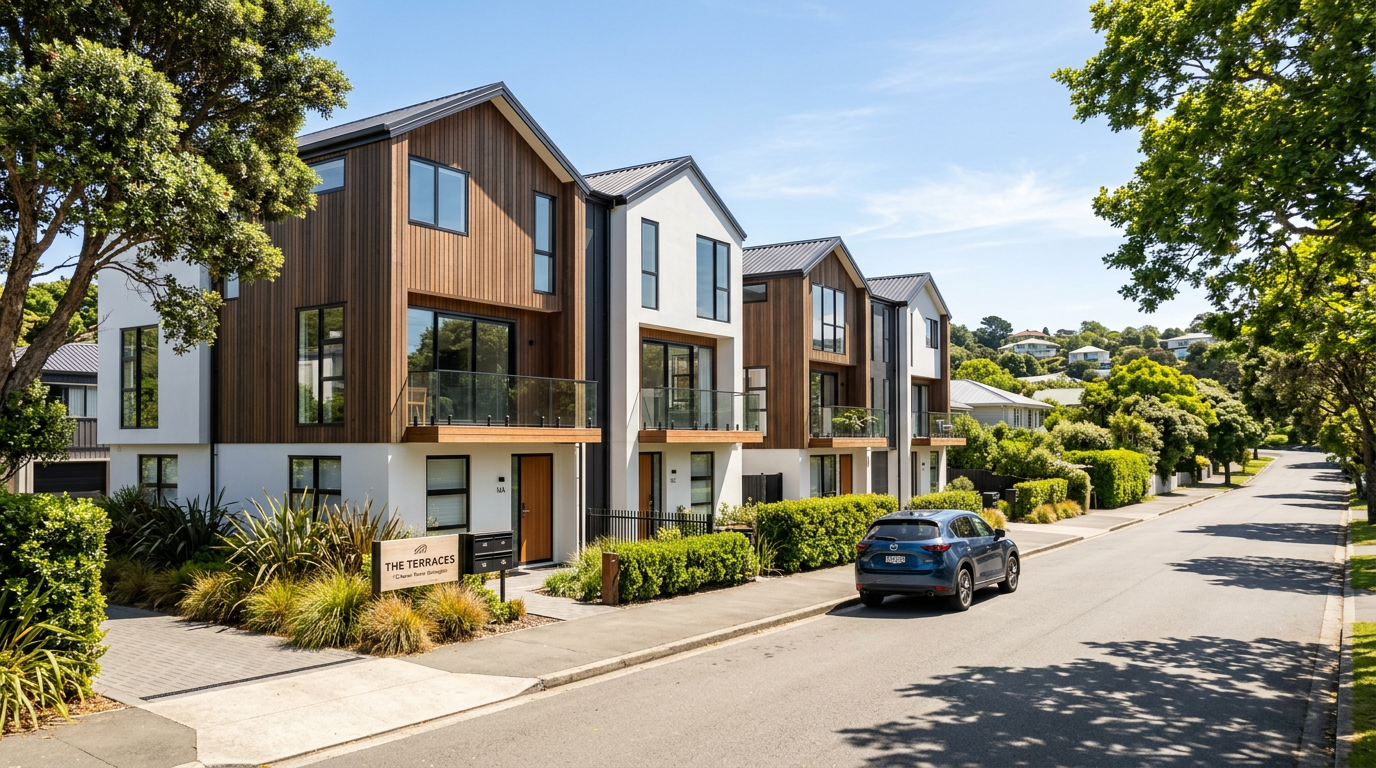
Mistake 4: Vietnamese Buying Property in New Zealand Gets the Financing and Remittance Sequence Wrong
Financing and remittance is where many Vietnamese buying property in New Zealand encounter their most significant practical obstacle, and Vietnam’s outward investment and foreign exchange framework adds a layer of complexity that most Vietnamese buying property in New Zealand have not encountered in other markets.
Vietnam’s outward investment rules, Decree 103/2026: Vietnam’s Decree 103/2026/ND-CP, which came into force on 3 April 2026, governs outward investment by Vietnamese individuals and enterprises. For a Vietnamese buying property in New Zealand as an individual investor, the decree requires registration of the foreign exchange transaction with the State Bank of Vietnam (SBV) for remittances above certain thresholds. Engage a Vietnamese lawyer experienced in outward investment to confirm the current registration requirements before initiating any remittance for a NZ property purchase, the rules changed materially in early 2026.
State Bank of Vietnam foreign exchange controls: All foreign currency purchases and outward remittances by Vietnamese nationals must be conducted through SBV-authorised credit institutions. A Vietnamese buying property in New Zealand cannot simply wire NZD from a personal account, the remittance must be processed through an authorised bank with supporting documentation confirming the purpose of the transfer. From February 2026, Vietnam has enforced stricter regulations on foreign currency exchange outside authorised channels. Ensure every remittance for a NZ property purchase is processed correctly through an authorised institution.
NZ AML documentation requirements: A Vietnamese buying property in New Zealand must also satisfy NZ anti-money laundering requirements on the receiving end. NZ property lawyers are required by law to verify source of funds. Vietnamese bank statements, proof of income source, business income documentation if relevant, and a clear remittance trail through the SBV-authorised channel are required before settlement can proceed.
NZ bank lending for Vietnam-based buyers: NZ retail bank lending to non-resident overseas persons is restricted. Most major NZ banks require existing NZ banking relationships or NZ-sourced income. Vietnam-based Vietnamese buying property in New Zealand at the entry level typically use full or partial cash positions. Non-resident specialist lenders exist at higher rates, factor financing costs into yield calculations before committing.
Ordinarily resident buyers: A Vietnamese buying property in New Zealand who is already ordinarily resident in NZ is treated comparably to a NZ citizen for lending purposes, standard income documentation, IRD number, LVR requirements identical to domestic buyers. The simplest financing position for any Vietnamese buying property in New Zealand.
An independent NZ agent on AsetraX experienced with APAC buyers can refer any Vietnamese buying property in New Zealand to property lawyers and mortgage brokers who regularly handle Vietnam-sourced remittance documentation.
Mistake 5: Vietnamese Buying Property in New Zealand Misunderstands the Cross-Border Tax Position
New Zealand’s tax framework is significantly more favourable than most Vietnamese buying property in New Zealand assume, and the Vietnam-side tax position is more nuanced than it first appears.
New Zealand tax, no stamp duty: New Zealand has no stamp duty on property purchase. Every Vietnamese buying property in New Zealand saves immediately compared to Vietnamese property transaction costs, which include registration fees, notarisation, and value-added tax on new builds that do not apply in New Zealand.
No broad capital gains tax: New Zealand currently has no general capital gains tax. Gains on property held beyond the two-year bright-line test are generally not taxable in New Zealand. For a Vietnamese buying property in New Zealand at Wellington’s current below-peak pricing, this creates meaningful upside optionality on a medium-term hold.
The bright-line test: If a Vietnamese buying property in New Zealand sells within two years of purchase, any capital gain is taxable as income at their marginal NZ rate. Hold beyond two years with genuine long-term investment intent and the gain is generally not taxable in NZ.
Rental income is taxable in NZ: All rental income from a NZ property is taxable in New Zealand regardless of where a Vietnamese buying property in New Zealand lives. NZ withholding tax applies via a NZ property management company for non-resident landlords. Always consult the IRD for NZ-specific guidance.
Vietnam-side tax treatment: Vietnam does not currently have a comprehensive foreign income tax rule equivalent to Thailand’s 2024 remittance-based tax change. Under Vietnam’s current personal income tax framework, overseas rental income remitted to Vietnam by a Vietnamese tax resident may be assessable in Vietnam, but the practical enforcement position for individual offshore rental income remains less developed than the NZ withholding tax framework. Brief a Vietnamese tax adviser experienced in cross-border property before settlement. The NZ–Vietnam Double Taxation Agreement provides relief against double taxation, NZ tax paid on rental income can be credited against Vietnamese tax liability on the same income.
No annual land tax: New Zealand has no annual land tax, a direct ongoing cost advantage over Vietnamese property holding costs and Australian state land tax regimes.

Mistake 6: Vietnamese Buying Property in New Zealand Ignores the Viet Kieu Angle
This section is specifically relevant to Việt Kiều, overseas Vietnamese, who are considering both NZ property and Vietnam domestic property simultaneously. It is a consideration that appears in no other APAC buyer guide in this series, and it is one of the most practically important for every Vietnamese buying property in New Zealand who retains Vietnamese nationality.
Under Vietnam’s 2025 land law reforms, Việt Kiều who hold a valid Vietnamese passport now have land use rights in Vietnam on the same basis as domestic citizens, a significant expansion from the previous position. Vietnamese buying property in New Zealand who also hold a valid Vietnamese passport can now, in principle, own property in both Vietnam and New Zealand simultaneously without the previous restrictions on Vietnamese passport holders owning Vietnamese land.
But for a Vietnamese buying property in New Zealand who has taken New Zealand citizenship and no longer holds Vietnamese nationality, the domestic Vietnamese ownership position is different, they are treated as a foreign buyer under Vietnamese law, subject to the 30% foreign ownership quota and 50-year lease term restrictions.
The practical implication: every Vietnamese buying property in New Zealand who is considering a dual-country property strategy should clarify their Vietnamese nationality status and confirm the current Việt Kiều land use rights position with a Vietnamese property lawyer before proceeding. This does not affect the NZ purchase, every Vietnamese buying property in New Zealand can proceed through the Foreign Buyer Eligible pathway regardless of Vietnamese nationality status, but it shapes the broader portfolio structure.
Mistake 7: Vietnamese Buying Property in New Zealand Without the Right Agent
The final avoidable mistake every Vietnamese buying property in New Zealand makes is approaching the market without an agent who understands cross-border purchases, Vietnamese buyer documentation requirements, and the practical realities of transacting from Vietnam.
New Zealand’s property market moves faster than most Vietnamese buying property in New Zealand expect. Due diligence windows are typically 10–15 working days, shorter than the timelines buyers are used to in Vietnam’s more negotiable market. Agents who understand what every Vietnamese buying property in New Zealand needs, proactive communication across ICT or HCM time zones, Foreign Buyer Eligible confirmation upfront, yield data structured for ROI analysis, familiarity with SBV remittance documentation, and experience with the AML source-of-funds requirements NZ lawyers apply to overseas-funded purchases, are a specific and valuable subset of the NZ agent market.
Every agent on the AsetraX marketplace is set up for cross-border APAC buyers including every Vietnamese buying property in New Zealand. Foreign Buyer Eligible status is clearly marked on every listing. Read the Wellington property investment guide and the Auckland vs Wellington comparison before deciding on your target market, then connect with an agent on AsetraX who works with Vietnamese buying property in New Zealand.
What to Do Next
If you hold a NZ residence visa and have been in NZ for 6+ months:
Check the LINZ eligibility tool to confirm ordinarily resident status. If you qualify, browse all ANZ listings on AsetraX on the same terms as a NZ citizen.
If you hold a NZ residence visa but are not yet ordinarily resident:
Obtain OIO consent pre-approval before making any offer. Brief a NZ property lawyer before signing.
If you’re Vietnam-based without a NZ visa:
Your entry point is a Foreign Buyer Eligible new build. Engage a Vietnamese lawyer experienced in outward investment to confirm Decree 103/2026 registration requirements. Prepare your SBV-authorised remittance documentation early. Then connect with a cross-border agent on AsetraX.
Regardless of category:
Brief both a NZ property lawyer and a Vietnamese tax adviser before settlement. If you are Việt Kiều considering a dual-country strategy, clarify your Vietnamese nationality and land use rights position with a Vietnamese property lawyer before proceeding. Stay current with the AsetraX blog for NZ market updates written for APAC buyers.
This article is for general guidance only and does not constitute legal, financial, or tax advice. New Zealand’s overseas investment rules, Vietnam’s outward investment regulations under Decree 103/2026, and SBV foreign exchange requirements change regularly, always verify current requirements with qualified professionals in both jurisdictions before proceeding.
Browse ANZ investment properties on AsetraX, Foreign Buyer Eligible status clearly marked on every listing, built for every Vietnamese buying property in New Zealand.




The Vietnamese community in Auckland is significant and growing. I’ve spoken to a few Vietnamese-NZ residents who are actively sending remittances back and also looking at bringing family members over. The property investment and migration pathway intersection is real for this community.
Arjun, you’re right, and the Vietnamese-NZ diaspora connection is a strong driver. The remittance flow combined with the property investment case creates a compelling dual motivation. Auckland’s Vietnamese community is also a natural referral network for the platform, something we’re building toward as beta grows.